Morris Cove, New Haven: a guide for families selling a probate home.
If your family has a loved one's home in Morris Cove, New Haven's quiet waterfront community on the east side of the harbor, you may be wondering what comes next. This guide explains what makes Morris Cove special, why so many of its shoreline cottages and colonials pass through probate, what the current market looks like for sellers, and the practical steps families can take to move forward with confidence. If you have recently lost someone you love, know that you are not alone, and that help is available at every step.
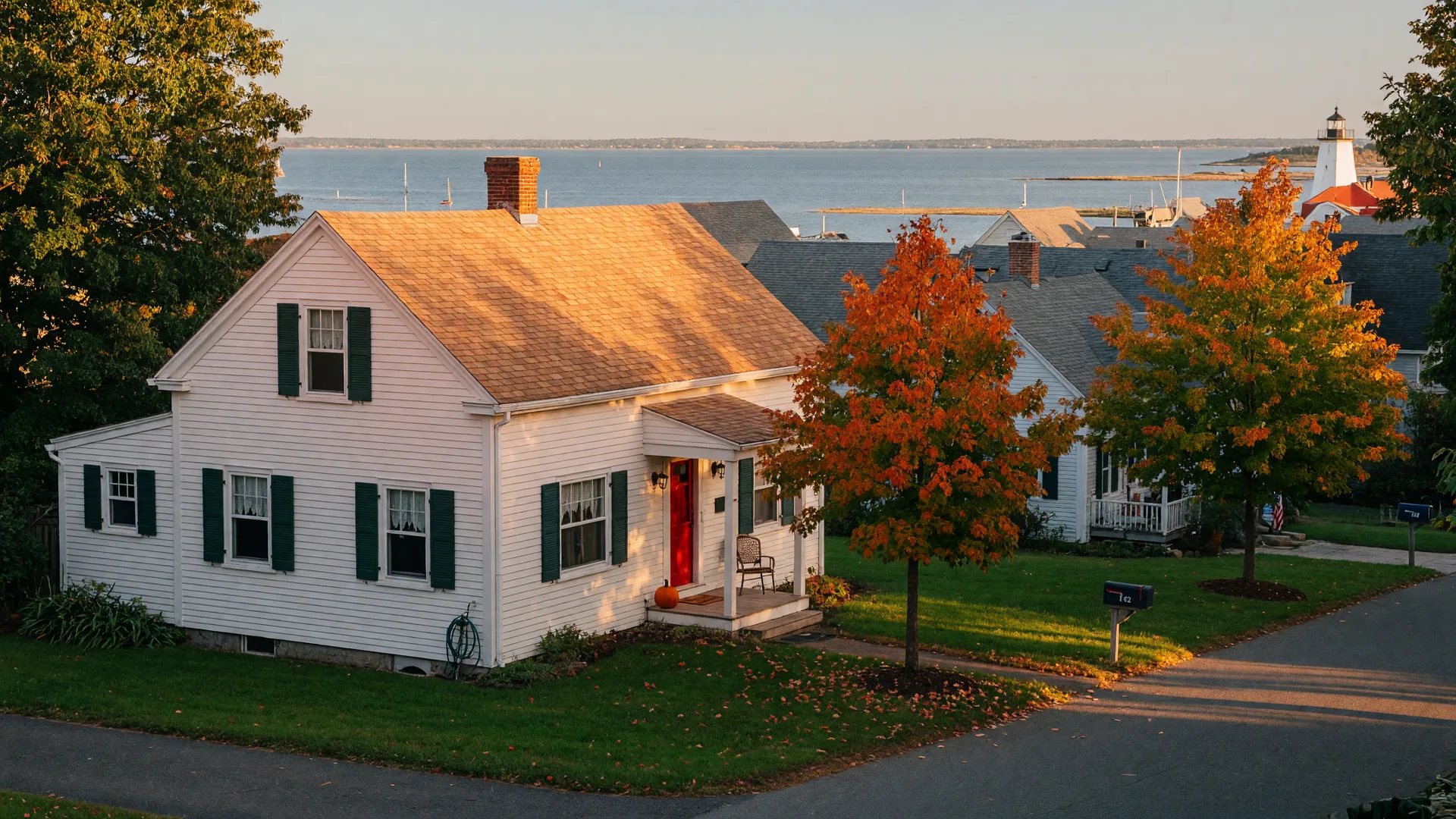
A waterfront neighborhood built for generations.
Morris Cove sits at the eastern edge of New Haven, a close-knit shoreline community that locals also call the East Shore. Walk its streets and you will find Cape Cods, raised ranches, Dutch colonials, small colonials, and bungalows on quiet, tree-lined lots, with an unmistakable salt-air feel. The neighborhood was originally part of East Haven and was annexed by New Haven in 1882, growing from a summer resort and streetcar suburb in the late 1800s into the settled family community it is today.
The heart of the area is the Morris Cove Historic District, a roughly 61-acre pocket of early-20th-century Colonial Revival homes and cottages built from the 1920s through the 1960s. Waterfront and water-view properties command a premium, and every summer neighbors gather for community traditions like the Halloween parade and the annual Easter egg hunt. With a population of about 5,100, it is the kind of place where families know their neighbors by name.
At the neighborhood's southern tip sits Lighthouse Point Park, an 82-acre park along Long Island Sound featuring a sandy beach, a tidal marsh, picnic groves, nature trails, a bird sanctuary, and an antique carousel beside the lighthouse that has marked the harbor entrance since the 1800s. The Pardee-Morris House, rebuilt in the 1780s after a British raid, stands nearby as a living reminder of how long families have put down roots here. Tweed-New Haven Airport borders the area to the east, keeping downtown and the shoreline within easy reach.
For many families, a Morris Cove home is where summers were spent on the beach, where kids learned to ride bikes on the quiet streets, and where holidays were celebrated for decades. It is not just a house. It is a lifetime of memories, and deciding what happens to it next deserves care, patience, and honest guidance.
Why so many Morris Cove homes enter probate.
There is a very practical reason neighborhoods like Morris Cove see so many probate sales: many of the homes were bought decades ago and lived in by the same owners for a lifetime. The woman who bought her cottage near the park in the 1970s may have kept it until her final year, with estate planning staying on a to-do list that never quite got done.
In Connecticut, probate is required whenever a deceased homeowner held a sole interest in real property of any value, or individually owned property worth more than $40,000 without a beneficiary designation. The most common reasons a Morris Cove home ends up in probate include:
The owner died without a will
When this happens, Connecticut's intestate succession laws determine who inherits the property. The estate must still go through the probate court, and the home typically cannot be sold until an administrator is appointed. Our guide on what happens when someone dies without a will in Connecticut explains this in detail.
The home was titled in the owner's name alone
Many older homes were purchased by one person, and the deed was never updated to add a spouse, a trust, or beneficiary designations. Connecticut does not recognize tenancy by the entirety, and a deed must expressly create joint tenancy with right of survivorship for the surviving owner to inherit automatically. Otherwise, the deceased owner's share passes through probate.
A will from decades ago needs court validation
An old, handwritten, or ambiguous will must be validated by the probate court before assets can be distributed. This takes time, and it is completely normal for families to feel uncertain about where to start.
The estate involves family dynamics or multiple properties
When heirs live in different states, when siblings disagree about the future of the home, or when the estate holds a beach cottage and a primary home, the process naturally takes longer and needs careful coordination. You can read more in our guide on resolving disputes among heirs.
For families in New Haven, the New Haven Probate Court at 200 Orange Street handles the estate. The court must authorize any sale of real estate, and an executor or administrator must be appointed before the home can be listed. If you are unsure which court serves your family, our guide to Connecticut probate court districts for New Haven families walks you through it.
The New Haven market as fall 2026 settles in.
As of early October 2026, the New Haven housing market remains seller-leaning and competitive. Redfin's citywide data put the New Haven median sale price near $387,000 over the three months ending in May, up about 1.9% from a year earlier, and a rolling three-month snapshot through the end of August landed near $400,000, about 2.5% higher than the spring quarter, with the median list price hovering around $395,000 (Agent Pronto).
Homes are spending roughly 37 to 49 days on the market citywide, close to the same pace as a year ago (Movoto and Redfin). Across Connecticut, supply sat around 2.6 months in September 2026, still well under the five to six months that marks a balanced market. For comparison, the New Haven-Middlesex REALTORS association reported about 2.8 months of supply in the city's market earlier this year, and New Haven County single-family homes have been changing hands around a $483,000 median, up 7.3% from a year earlier (SmartMLS, June 2026). Mortgage rates near 7% remain a factor, with the average 30-year fixed rate in Connecticut around 6.95% in August (Experian and Curinos).
What does this mean for your family? Inventory is still thin, buyers are pre-approved and serious, and a well-priced, well-presented home still attracts attention quickly. Buyers are more thoughtful about price and condition than they were a few years ago, so honest pricing matters more than ever. And neighborhood facts count. Citywide averages only tell part of the story: Morris Cove's beach-community feel, its historic district, and its proximity to Lighthouse Point Park give it an enduring appeal that tends to hold up well in any market. The right comparable sales, however, come from Morris Cove's own streets, not from the whole city. A local agent who has sold these homes can show you real, current comps so you are never guessing about the number that goes on the sign.
What makes a Morris Cove probate sale different from a typical sale.
Selling a Morris Cove home through probate involves everything that makes any probate sale careful work, layered on top of a shoreline neighborhood with quirks of its own. Here is what families should know going in.
The historic district affects changes
The Morris Cove Historic District protects the neighborhood's early-20th-century character, and exterior changes to designated properties require approval from the city's Historic District Commission. For sellers, this matters most when planning repairs or cosmetic updates before listing, so check with the commission before changing windows, siding, doors, or exterior details.
Shoreline homes have coastal considerations
Proximity to the harbor can bring moisture, storm exposure, and flood insurance questions. Buyers will ask, so having the facts ready and honest about the home's history helps the process move smoothly. None of this is a reason to panic, but it is worth knowing what inspections will surface before buyers do.
The court stays involved through closing
A probate sale can be informal, with heir consent and court oversight, or formal, which includes a court confirmation hearing. In either case, the executor coordinates with the estate attorney, and the court must approve the sale before closing. Timelines run a little longer than a typical sale. Our guide to how long probate takes in Connecticut gives realistic expectations.
Value, liens, and the estate tax picture
Connecticut places liens on estate real property to secure state estate taxes and probate fees, and these must be released before title can convey. Most estates fall below the $15 million exemption threshold and owe no estate tax, but the lien still attaches automatically at death and must be formally cleared, which the executor and attorney handle as routine steps. Our guide to the tax implications of selling a probate home explains the basics.
Finally, most probate homes are sold as-is. When a home has been closed up for months or years, deferred maintenance is common, and getting honest eyes on the property early, before the first buyer does, is one of the smartest things a family can do. Our guide on selling a probate home as-is walks through the tradeoffs.
Watch: Steps to Selling a Probate Property
The steps of a probate sale are the same whether the home sits near Lighthouse Point Park or anywhere else in Connecticut: executor appointment, inventory, listing, court approval, and closing. This short video walks through the process so your family knows what to expect at every step. Share it with relatives who are wondering why the process takes time, and who it might reassure to see the roadmap laid out plainly.
A practical path forward for Morris Cove families.
Whether you are the executor, an heir, or a family member helping out, the path forward does not have to feel overwhelming. Here are the steps I walk families through when a loved one's Morris Cove home needs to be sold.
Start with the people, then the paperwork
Gather the will, bring the family together, and decide who will serve as executor or administrator. Bring copies of the death certificate and the will to the New Haven Probate Court at 200 Orange Street to open the estate. This first visit is more straightforward than most people expect.
Understand whether the sale is formal or informal
With heir consent, many sales proceed on an informal basis with court oversight, which is faster. Some cases, though, require a formal sale with a court confirmation hearing. Your estate attorney will advise which applies to your family, and knowing that upfront prevents surprises later. Our guide to court confirmation hearings for probate sales explains the difference.
Get pricing from Morris Cove, not from the whole city
Comparable sales should come from the same neighborhood: similar homes, similar lot sizes, similar conditions, on streets buyers actually consider. A local agent who has sold homes on these streets can pull current data and explain what it means in plain language, including how the historic district and shoreline location factor into value.
Disclose what you know, honestly
For a pre-1978 home, federal law requires lead paint disclosures, and Connecticut sellers must complete property condition disclosures. Shoreline homes also bring flood and storm history questions. Work with your agent to prepare these carefully. Buyers respect honesty, and it protects everyone through closing.
Give the home a fair chance to show itself
You do not need a full renovation, but a deep clean, clear walkways, trimmed landscaping, opened shades, and bright rooms help buyers picture themselves home. Our guide on preparing a family home for sale during probate covers this gently. And if the situation is urgent, we can talk about selling as-is instead.

Robert Clarke
Coldwell Banker Realty · 24 Washington Ave, North Haven, CT 06473
(203) 936-9004 ·
rob@robandvicCT.com
I grew up in Connecticut and serve families in New Haven, Hamden, North Haven, Branford, Milford, and surrounding communities. If you are caring for a loved one's home in Morris Cove or anywhere in the New Haven area, I would be honored to help you navigate the process with patience and care.
Key takeaways for families with a Morris Cove home.
If you are responsible for a loved one's Morris Cove home, here is what I want you to remember:
- ✓You are not alone in this. Morris Cove homes pass through probate all the time. The process is established, the court is familiar with it, and help is available at every step.
- ✓Probate is required more often than families expect. A single-name deed, an old will, or no will at all mean the home must go through the New Haven Probate Court, and that is entirely manageable with good help.
- ✓The market is still workable for sellers. New Haven prices have held near $387,000 to $400,000 with roughly 2.6 months of supply statewide, so a well-priced, well-presented home still attracts serious buyers.
- ✓Shoreline and historic details matter. Historic district approvals, flood and storm history questions, aging systems, and as-is sales are all routine for Morris Cove probate homes, but worth planning for in advance.
- ✓A local guide makes the difference. An agent who knows Morris Cove's streets, its historic district, Lighthouse Point Park, and its buyer pool can keep the process calm, organized, and honest from the first conversation.
I have helped families in neighborhoods just like this one turn an overwhelming chapter into a straightforward one. If you are caring for a loved one's home, I would be honored to talk. There is no pressure and no obligation, just a conversation about your family's needs and the path ahead.
Selling a probate home in Morris Cove? Let us talk through it together.
Whether you are an executor who just opened an estate at the New Haven court or an heir wondering what happens next, I am here to help with honest, compassionate guidance.