Wooster Square, New Haven: a guide for families selling a probate home.
This guide explains what makes Wooster Square one of New Haven's most beloved neighborhoods, why so many of its brick homes pass through probate, and what families can expect when selling one. If you have recently lost a loved one, you are not alone. The goal is to help you feel more confident and at ease with the next chapter.
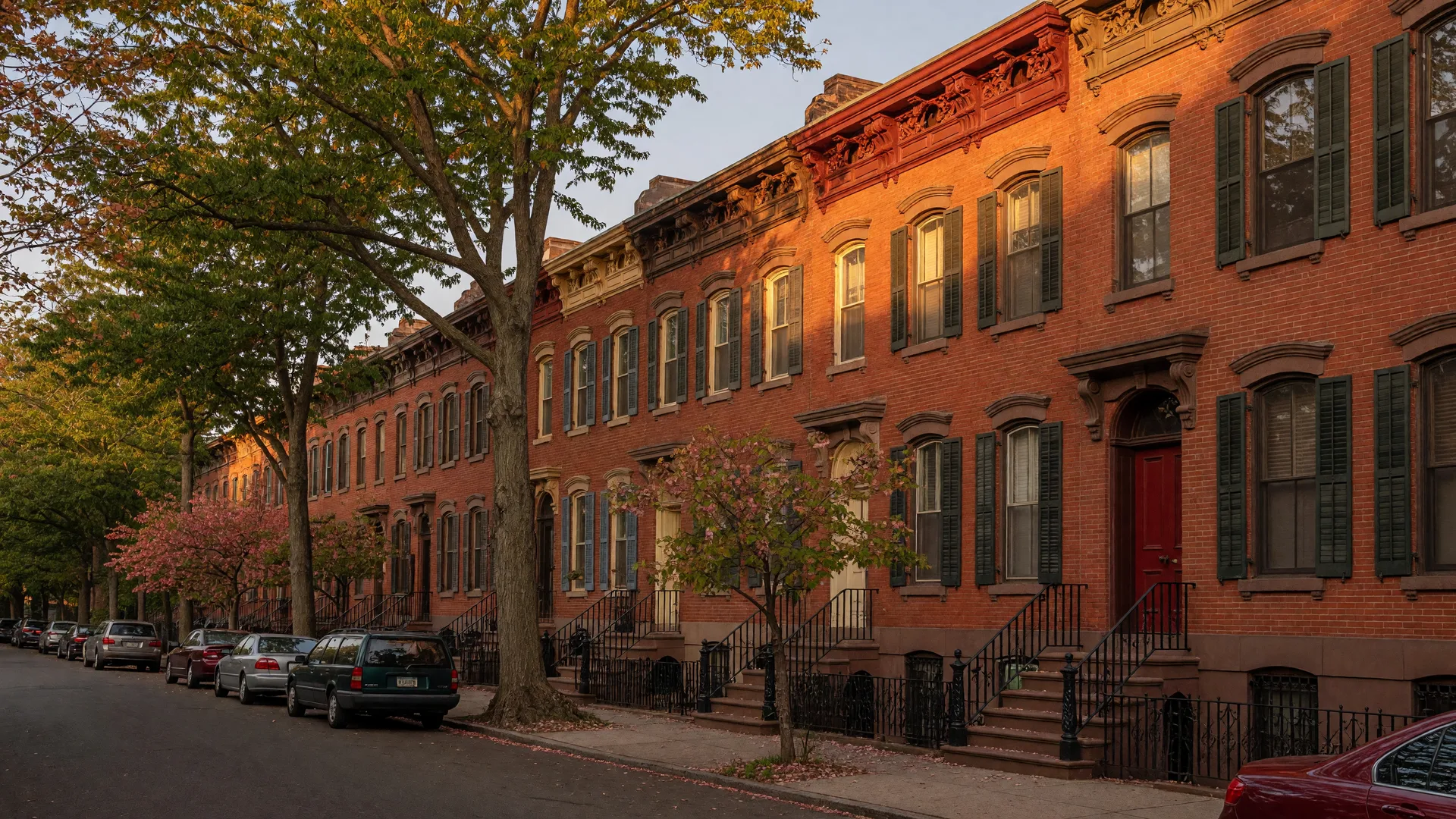
A neighborhood rich in history and character.
Wooster Square is New Haven's historic Little Italy, a neighborhood that feels like a small village tucked next to downtown. It is recognized as both a National Register and a Local Historic District, and much of its landscape was built up between 1830 and 1870, with many of the buildings designed by the architect Henry Austin. Its name honors General David Wooster, who died in the Revolutionary War.
Walk the brick sidewalks and you will see the full story of a neighborhood in its architecture: Federal and Greek Revival houses, grand Italianate villas like the Hotchkiss-Stephens House, the 1871 brownstone row, and the Italianate brick row buildings that anchor Wooster Street itself. By the turn of the twentieth century, Italian families had made the area their own, filling the houses with three generations at a time and turning the neighborhood into the center of New Haven's Italian community.
Today that heritage shows in everything: the rhythm of church bells, the aroma of coal-fired pizza, and the annual celebration of spring. Over the years, descendants of those families have left their mark. The neighborhood is crowned by Wooster Square Park, where hundreds of Tokyo cherry blossom trees have been planted since the early 1970s, and each spring the Cherry Blossom Festival fills the park with music, food, and neighbors. It is a place where long-time owners planted roots decades ago, which is exactly why probate sales happen here so often.
If your family owned one of these homes, you already know it is more than brick and mortar. It is the neighborhood where grandparents' recipes were passed down, where first communions and weddings were celebrated, and where the same stoop held generations of children. That is worth honoring as you decide what comes next.
You can explore more of the city's other treasured corners in our guides to Westville and East Rock.
Why so many Wooster Square homes enter probate.
There is a very practical reason neighborhoods like Wooster Square see so many probate sales: the homes are often lived in by the same owners for decades. A family may have purchased a brick two-family in the 1960s or 1970s and kept it into their final years. In that time, estate planning often stayed on a to-do list that never quite got done.
In Connecticut, probate is required whenever a deceased homeowner held a sole interest in real property of any value, or individually owned property worth more than $40,000 without a beneficiary designation. The most common reasons a Wooster Square home ends up in probate include:
The owner died without a will
When this happens, Connecticut's intestate succession laws determine who inherits the property. The estate must still go through the probate court, and the home typically cannot be sold until an administrator is appointed. Our guide on what happens when someone dies without a will in Connecticut explains this in detail.
The home was titled in the owner's name alone
Older homes were often purchased by one person, and the deed was never updated to add a spouse, a trust, or beneficiary designations. Connecticut does not recognize tenancy by entirety, and a deed must expressly create joint tenancy with right of survivorship for the surviving owner to inherit automatically. Otherwise, the deceased owner's share passes through probate.
A will from decades ago needs court validation
An old, handwritten, or ambiguous will must be validated by the probate court before assets can be distributed. This takes time, and it is completely normal for families to feel uncertain about where to start.
The estate involves family dynamics or complex assets
When heirs live in different states, when siblings disagree about the future of the home, or when the estate holds multiple properties, the process naturally takes longer and needs careful coordination. You can read more in our guide on resolving disputes among heirs.
For families in New Haven, the New Haven Probate Court at 200 Orange Street handles the estate. The court must authorize any sale of real estate, and an executor or administrator must be appointed before the home can be listed. If you are unsure which court serves your family, our guide to Connecticut probate court districts for New Haven families walks you through it.
The Wooster Square market as fall begins.
As of early September 2026, the New Haven housing market remains tight and moderately competitive. Citywide median sale prices have hovered near $381,000 to $390,000 over the past year, up roughly four to six percent from a year earlier, with homes averaging around three to five weeks on the market. Inventory has stayed low, roughly one to two months of supply, which still favors sellers in many price ranges.
Wooster Square tells its own story, and it is worth sitting down with a local agent for current numbers because the neighborhood moves on its own rhythm. Reported figures in the past year place the neighborhood's median sale price near $380,000 to $395,000, with renovated one and two bedroom condominiums commonly trading in the mid-three hundreds and larger brick families and townhouses bringing significantly more. Recent sales in the neighborhood have ranged broadly, from fixer-uppers to completely renovated homes, and the average sale price has climbed noticeably year over year.
What does that mean for families? Wooster Square's combination of historic character, location near downtown, and famous pizza culture gives it a steady pool of buyer interest year-round. Getting the price right, from the right comparable sales within the neighborhood's own streets, matters more than anything. A knowledgeable local agent can show you real, current Wooster Square comps so you are never guessing about the number that goes on the sign.
What makes a Wooster Square probate sale different from a typical sale.
Selling a Wooster Square home through probate involves everything that makes any probate sale careful work, layered on top of a historic district with rules of its own. Here is what families should know going in.
Historic district rules apply
Wooster Square is one of New Haven's Local Historic Districts, so most exterior changes to a private property require a Certificate of Appropriateness issued by the Historic District Commission before work can start. That means changing windows, doors, siding, roofing, or other features visible from the street needs city approval. For sellers this matters most when planning repairs or cosmetic updates before listing, so it's worth checking with the city plan department before touching the outside.
Disclosure obligations for older homes
Most brick homes here were built long before 1978, so federal lead paint disclosure rules apply, and older houses may involve asbestos, aging boilers, oil tanks, or historic wiring. None of this is a reason to panic, but knowing what inspections will surface helps you plan honestly rather than be surprised later.
The court stays involved through closing
A probate sale can be informal, with heir consent and court oversight, or formal, which includes a court confirmation hearing. In either case, the executor coordinates with the estate attorney, and the court must approve the sale before closing. Timelines run a little longer than a typical sale. Our guide to how long probate takes in Connecticut gives realistic expectations.
Value, liens, and the estate tax picture
Connecticut places liens on estate real property to secure state estate taxes and probate fees, and these must be released before title can convey. Most estates fall below the $15 million exemption threshold and owe no estate tax, but the lien still attaches automatically at death and must be formally cleared, which the executor and attorney handle as routine steps.
Finally, most probate homes are sold as-is. When a home has been closed up for months or years, deferred maintenance is common, and getting honest eyes on the property early, before the first buyer does, is one of the smartest things a family can do. Our guide on selling a probate home as-is walks through the tradeoffs.
A practical path forward for Wooster Square families.
Whether you are the executor, an heir, or a family member helping out, the path forward does not have to feel overwhelming. Here are the steps I walk families through when a loved one's Wooster Square home needs to be sold.
Start with the people, then the paperwork
Gather the will, bring the family together, and decide who will serve as executor or administrator. Bring copies of the death certificate and the will to the New Haven Probate Court at 200 Orange Street to open the estate. This first visit is more straightforward than most people expect.
Understand whether the sale is formal or informal
With heirs' consent, many sales proceed on an informal basis with court oversight, which is faster. Some cases require a formal sale with a court confirmation hearing. Your estate attorney will advise which applies to your family, and knowing that upfront prevents surprises later. Our guide to court confirmation hearings for probate sales explains the difference.
Price from your own streets, not the whole city
Comparable sales should come from Wooster Square itself: similar brick and row-house buildings, similar conditions, on the streets buyers actually consider. A local agent who knows the neighborhood's blocks can pull current data and explain what it means in plain language.
Disclose what you know, honestly
For a pre-1978 home, federal law requires lead paint disclosures, and Connecticut sellers must complete property condition disclosures. Work with your agent to prepare these carefully. Buyers respect honesty, and it protects everyone through closing.
Give the home a fair chance to show itself
You do not need a full renovation, but a deep clean, clear walkways, trimmed landscaping, unlocked closets, and bright rooms help buyers picture themselves home. Our guide on preparing a family home for sale during probate covers this gently. And if the situation is urgent, we can talk about selling as-is instead.
Watch: Steps to Selling a Probate Property
Selling a probate home in a historic, in-demand neighborhood like Wooster Square follows the same careful sequence every probate sale does: authority first, then pricing, then the court-approved path to closing. This short video walks through the steps so you know what to expect, and when.

Robert Clarke
Coldwell Banker Realty · 24 Washington Ave, North Haven, CT 06473
(203) 936-9004 ·
rob@robandvicCT.com
Key takeaways for families with a Wooster Square home.
If you are responsible for a loved one's Wooster Square home, here is what I want you to remember:
- ✓You are not alone in this. Wooster Square homes pass through probate all the time. The process is established, the court knows it, and help is available at every step.
- ✓Probate is required more often than families expect. A single-name deed, an old will, or no will at all mean the home must go through the court, and that is entirely manageable with good help.
- ✓The market remains workable for sellers. Inventory is low and Wooster's historical charm draws steady buyer interest. Pricing honestly, with neighborhood comps, is the key.
- ✓Historic district rules matter. Exterior changes require the Historic District Commission sign-off, and older brick homes carry disclosure duties. Both are routine, but worth planning for in advance.
- ✓A local guide makes the difference. An agent who knows Wooster's streets, its brick and brownstone buildings, its historic rules, and its buyer pool can keep the process calm, organized, and honest from the first conversation.
I have helped families in neighborhoods just like this one turn an overwhelming chapter into a straightforward one. If you are caring for a loved one's home, I would be honored to talk. There is no pressure and no obligation, just a conversation about your family's needs and the path ahead.
Selling a probate home in Wooster Square? Let us talk through it together.
Whether you are an executor who just opened an estate at the New Haven court or an heir wondering what happens next, I am here to help with honest, compassionate guidance.